

Hiring plant is not difficult. Hiring it on terms you can actually compare, and getting on site what you were quoted, is where the work is.
This is the sequence, in the order that saves the most money and argument. None of it is specific to any platform. It is how to ask, whoever you ask.
In short
- Specify five things: machine and size, dates, site access, who provides operator/fuel/transport, and duration.
- Ask everyone the same written question, or the offers cannot be compared at all.
- Compare the scope, not the rate. The cheaper number is often the one that left the operator out.
- Check the machine before you sign for it: hours, condition, and that it is the machine on the offer.

Step 1: Specify the job, not the machine you imagine
Five things decide whether an offer can be answered without a phone call back. Each one closes an argument that otherwise arrives with the invoice:
| What you state | What it prevents |
|---|---|
| Machine type and size, by operating weight | The wrong class arriving, or a "30-tonne" that is not one |
| Start date, duration, and whether dates can move | Being priced by the day for a month-long job |
| Site access: width, ground, low-loader turning | A machine that cannot get in, or a second transport charge |
| Who provides operator, fuel and transport | Two offers that are not the same deal |
| When the hire ends and who confirms it | Charging that runs past the day you finished |
Step 2: Ask wider than your contact list
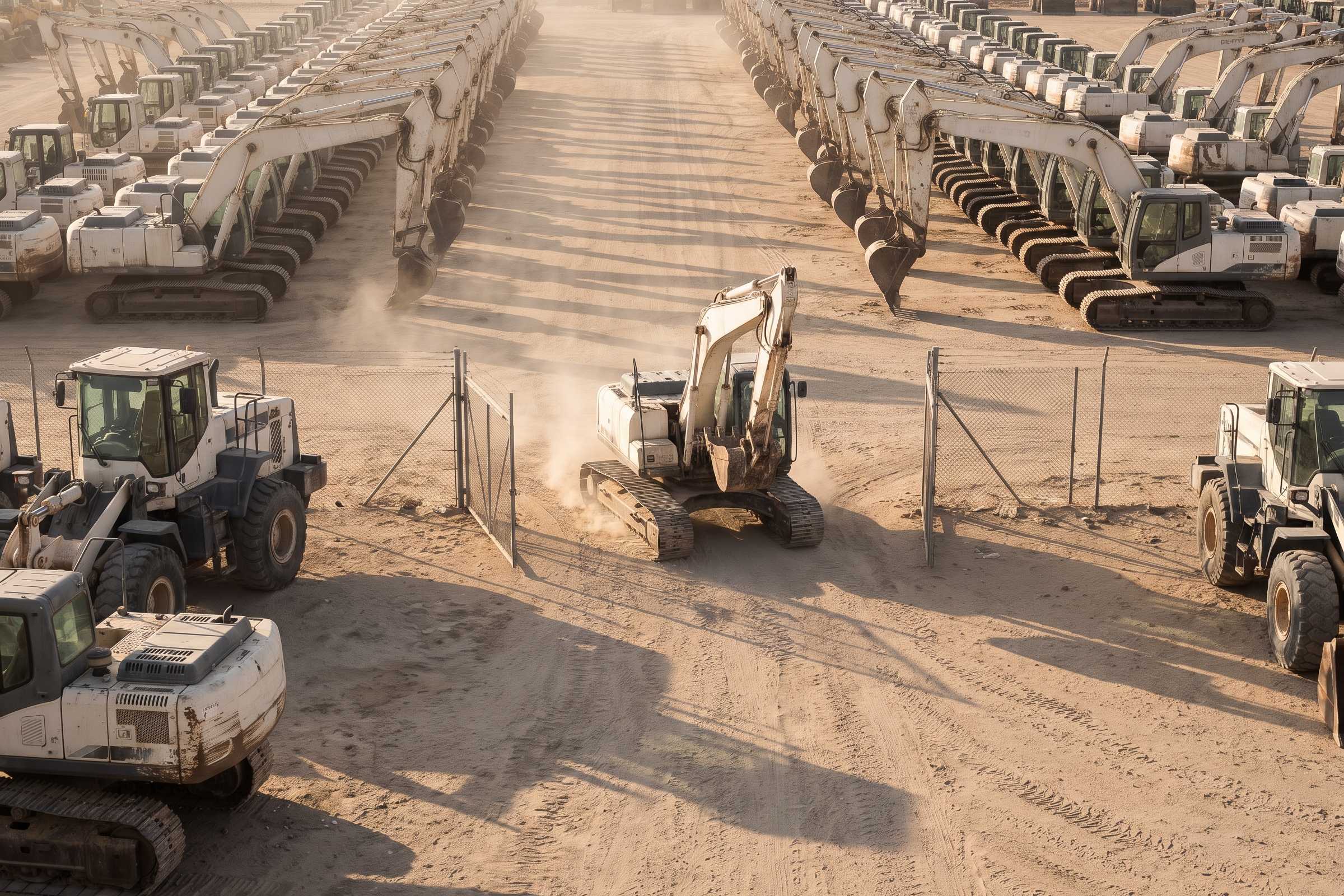
Three yards you have used before is a habit, not a market. On the most-quoted machine in Riyadh the middle half of offers still spans a quarter of the price, so the fourth yard you did not call is exactly where the useful number was. A supplier can answer a shared request without creating an account, so a yard that is not on any platform can still reply.
Step 3: Compare on one basis
What to line up
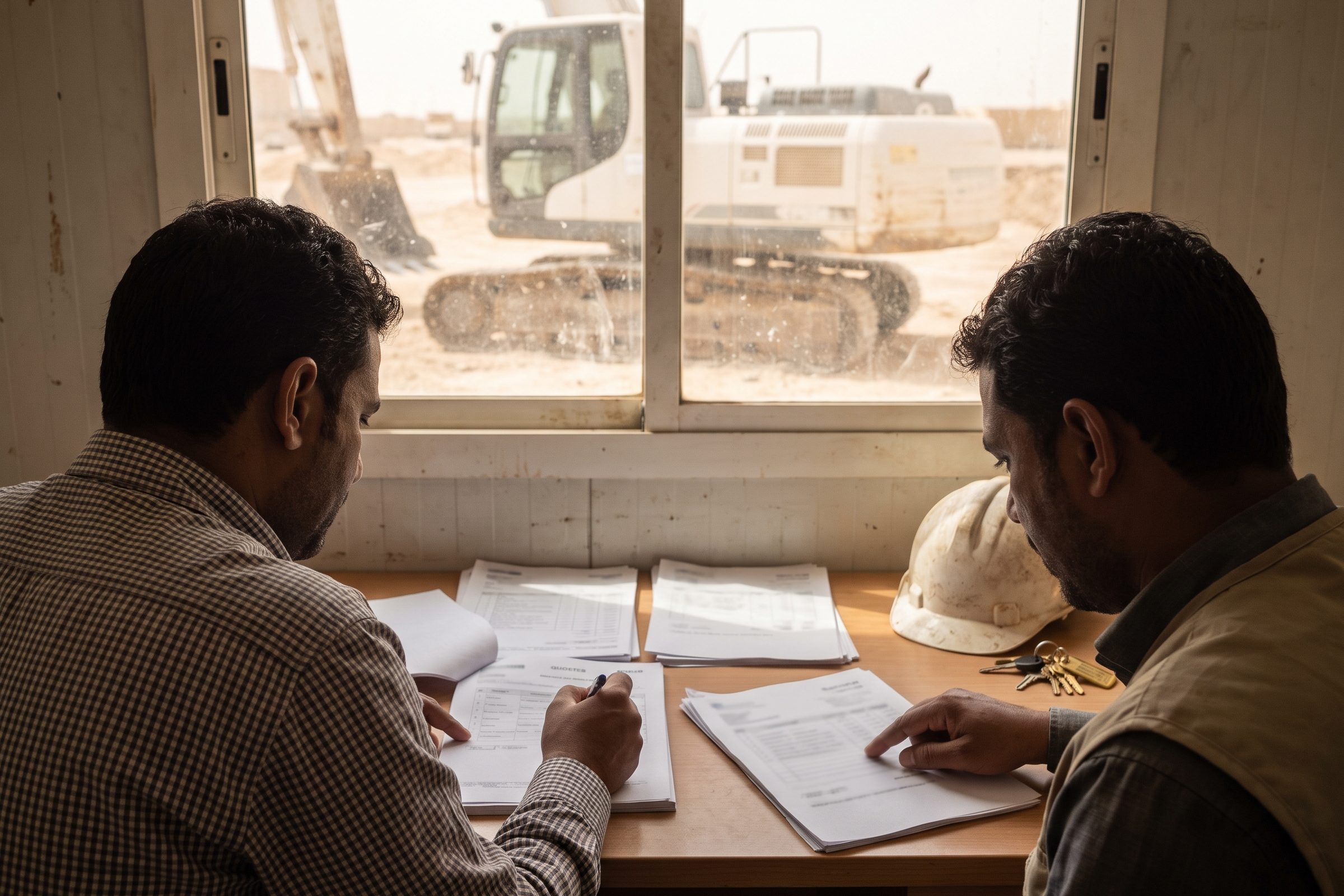
Rate, what is included, who operates it, mobilisation both ways, and the arrival date. If one offer states an operator and another is silent, they are not two prices for one thing. They are two different things.
Sanity-check the number
Our published ranges are the middle half of real quotes with the count beside them. An offer far outside the range is a question (scope, condition, distance or duration) not automatically a bad offer. Current figures are on the rental rates page.
Check who you are dealing with
Commercial registration, VAT registration, national address, and whether the machines are theirs. Verification covers exactly that, takes two to three working days, and is not a safety inspection or a recommendation.
Step 4: Receive the machine properly
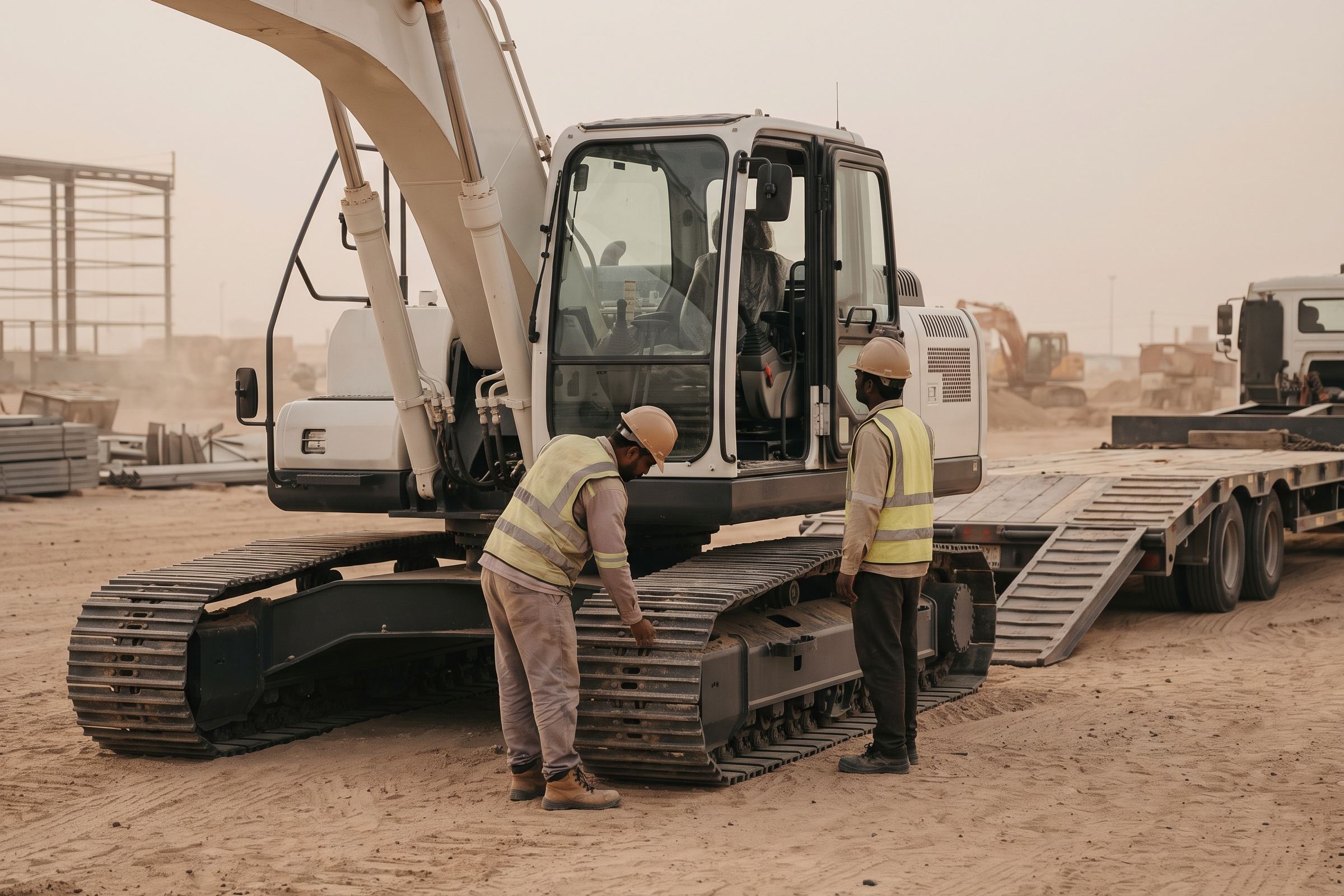
- Photograph the machine on arrival, before it moves.
- Read the hour meter and write the number on the delivery note.
- Check the undercarriage or tyres, and the attachment you asked for.
- Confirm the machine on the trailer is the machine on the offer: model and serial, not just the class.
- Test the basic functions before you sign.
The mistakes that cost the most
- A vague request. "An excavator, next week" cannot be answered without a conversation, and conversations cost days.
- Comparing rates with different scopes. The most common way to pick the expensive offer by accident.
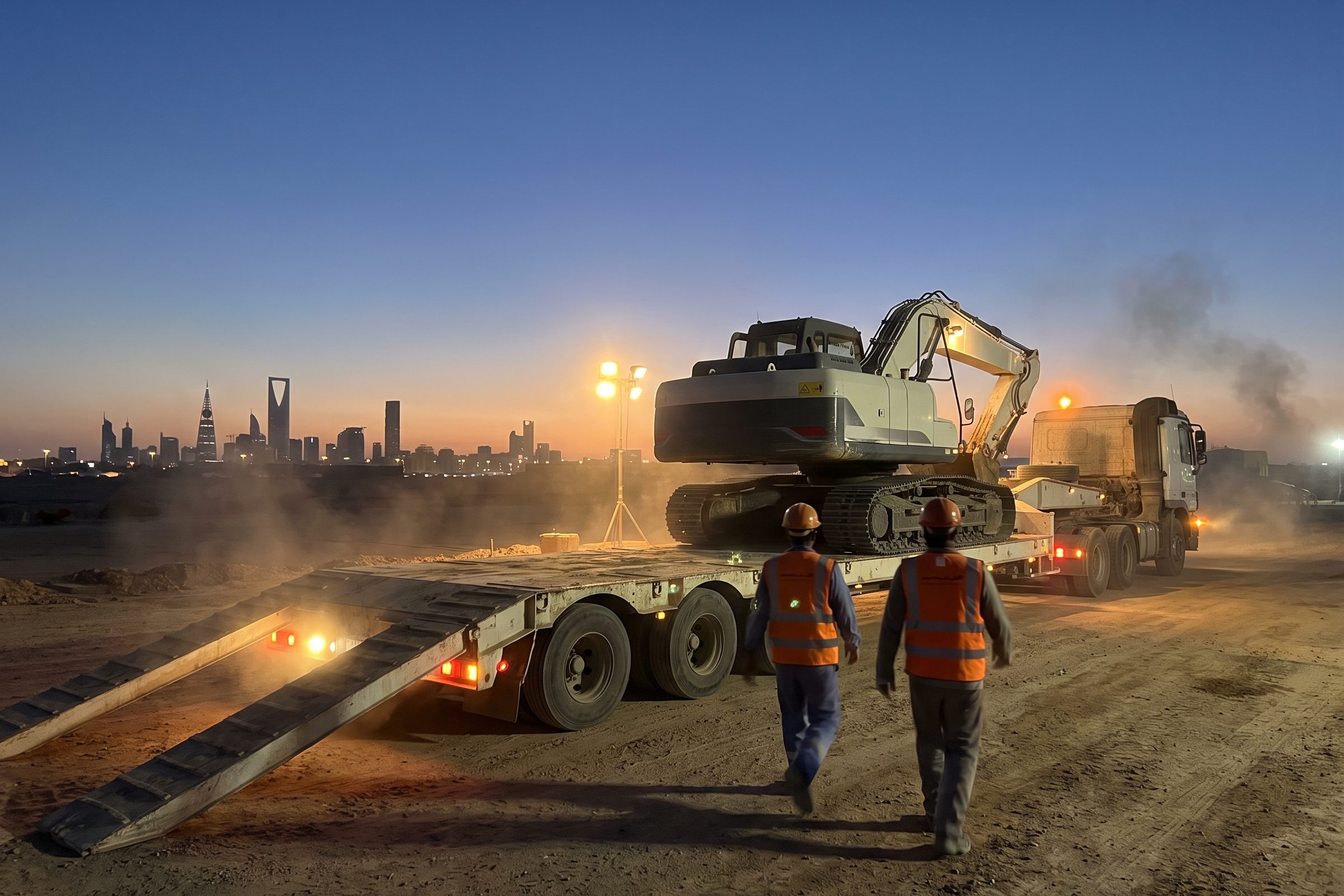
- Forgetting transport is charged twice. Out and back, and on a short hire it can be a fifth of the bill.
- Letting a short job be priced as a month, or a month-long job be priced by the day: the month is worth about twenty-five days of the daily rate.
- No written off-hire. Agree who confirms the end date before the machine arrives, not after.
See how a request works if you want this run as one written request rather than five phone calls.
Source: Moedatech platform data. The published ranges rest on 13,820+ supplier quotes given on the platform between April and August 2026. Figures on this page are Riyadh unless stated, in Saudi riyals, excluding VAT. A quote count in a table is the number of offers received for that one machine size in that period; it is not a measure of how many suppliers or machines are on the platform, which the company publishes separately. Operator share and mobilisation are medians across the quotes for that size, and a price range is the middle half of them, so a quarter of offers sit below it and a quarter above.