

Idle time is rarely just a sales problem. It is usually an inventory problem and a quoting problem, and both of those can be measured.
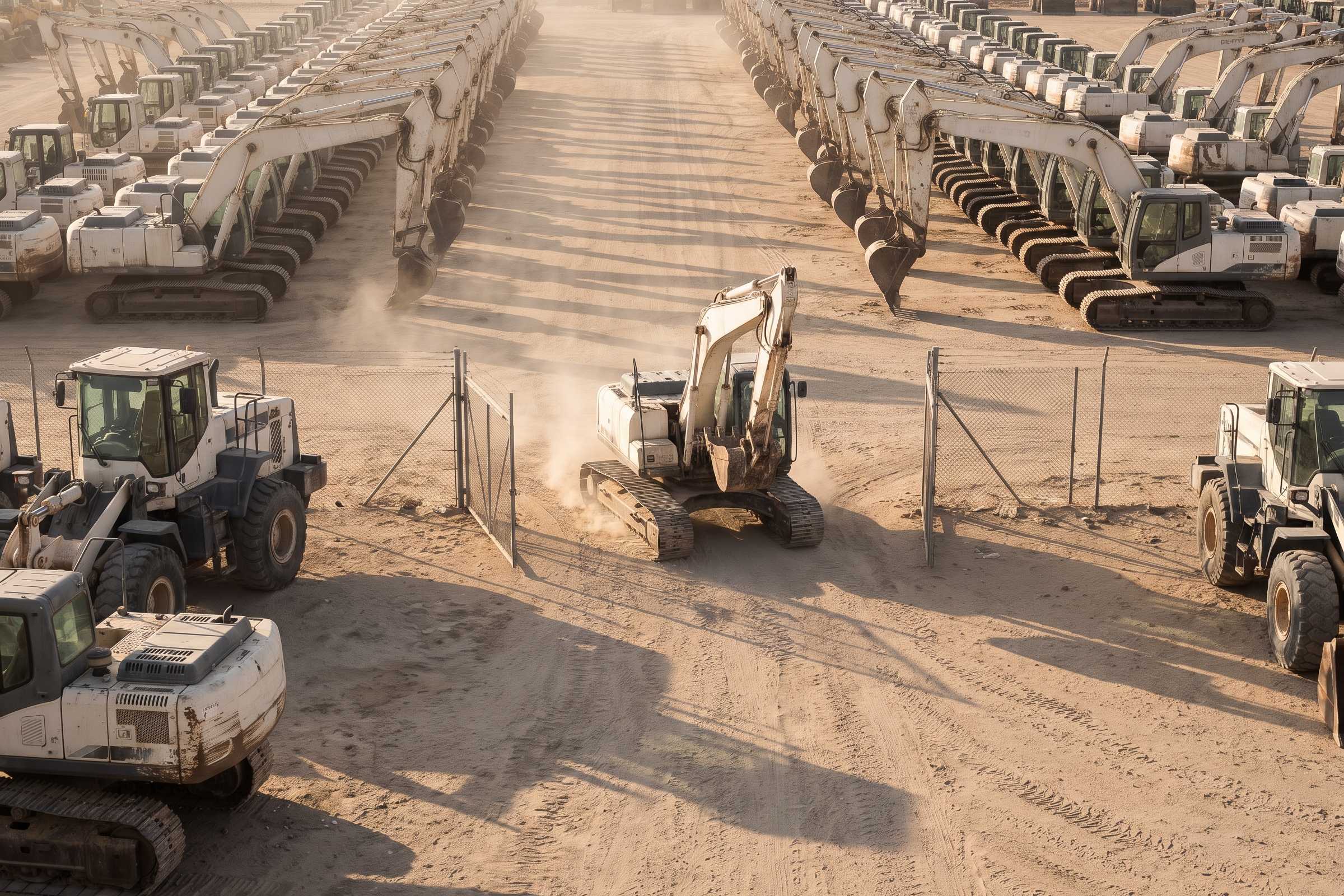
A fleet is capital standing in a yard. If your excavators and loaders are still for 40% of the month, the finance cost runs whether they move or not. The usual answer is "find more customers". The more useful questions are which machines this market actually asks for, and whether your offer can be laid next to the yard down the road and compared at all.
In short
- Demand is concentrated. One size (the 20-tonne crawler excavator) drew more Riyadh quotes in five months than any other, more than twice the next.
- This market hires by the month. Several sizes carry no daily quotes at all, and a monthly price works out at about twenty-five days of the daily rate.
- Distance is priced. Mobilisation runs from about 1,000 SAR to 5,500 and up, so nearby work starts cheaper before the rate is discussed.
- Say what is included. The quote that states the operator, the transport and the period is the one that survives a comparison.

Where the demand actually is
Our platform data is a demand map as much as a price list. Counting Riyadh quotes by machine size over five months:
| Machine and size | How often quoted |
|---|---|
| Crawler excavator, 20 t | Most quoted |
| Backhoe loader, 74-109 hp | Most quoted |
| All-terrain crane, 50 t | Most quoted |
| Forklift, 10 t | Most quoted |
| Motor grader, 12-14 ft | Often quoted |
| Generator, 500 kVA | Often quoted |
| Wheel loader, 5 m³ | Often quoted |
What the long tail means for a yard
Everything below those sizes is quoted a handful of times a season. A rare machine can be very profitable (there is less competition on it) but its utilization depends on one or two customers finding you. That is a different business from the head of the curve, where you win on availability and on answering first.
This market hires by the month
Several sizes in our data carry no daily quotes at all: 10-tonne forklifts, 500 kVA generators, and 2.5 and 3 m³ wheel loaders were quoted monthly only. Where both periods exist, the monthly figure works out at roughly twenty-five days of the daily rate:
| Machine | Per day | Per month | Month as days |
|---|---|---|---|
| Crawler excavator, 20 t | 650-800 | 16,000-20,000 | ~25 |
| Backhoe loader, 74-109 hp | 500-560 | 12,375-15,000 | ~25 |
For a yard that shapes what is worth chasing. A monthly hire is twenty-five paid days with one delivery and one collection. The same days won as scattered daily jobs carry a transport cost at each end, and a gap between each one.
Distance is part of your price
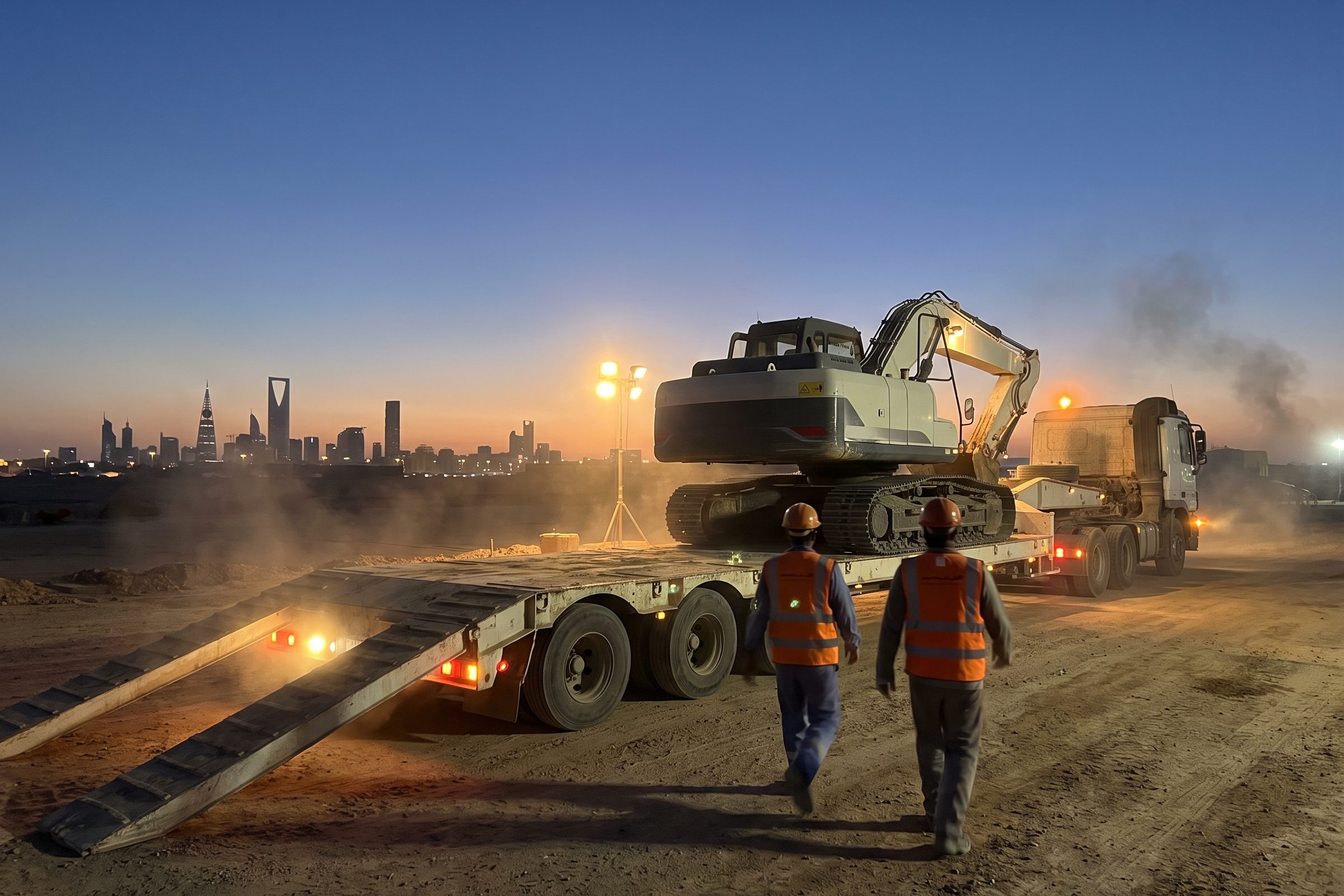
Mobilisation is quoted separately and the customer sees it next to the rate. The median one-way figure runs from about 1,000 SAR on a 20-tonne excavator to 5,500 on a D8 dozer, and higher on large cranes. A yard 20 km from site starts cheaper than one 200 km away before anybody discusses the daily rate, which is why the work near you is worth answering first, and fast.
Quote so you can be compared: then win the comparison
- State the operator. Across the same machine class this varies enormously: 85% of 20-tonne excavator quotes include one, 36% at 30 tonnes, 12% on a 10 m³ wheel loader. The contractor cannot assume, so the quote that says it outright is the one that gets compared properly.
- Give transport as numbers. Mobilisation and demobilisation, not "to be advised".
- Price the period asked for. Quoting a five-day job as a month, or a month as thirty days, is the fastest way off a shortlist.
- Describe the machine. Year, hours, and the off-hire rule.
You do not need an account to answer a shared request, so you can start by replying to work already on the platform. Verification takes two to three working days and is what lets a contractor put your name in front of their own client. See how requests reach a supplier.
Source: Moedatech platform data. The published ranges rest on 13,820+ supplier quotes given on the platform between April and August 2026. Figures on this page are Riyadh unless stated, in Saudi riyals, excluding VAT. A quote count in a table is the number of offers received for that one machine size in that period; it is not a measure of how many suppliers or machines are on the platform, which the company publishes separately. Operator share and mobilisation are medians across the quotes for that size, and a price range is the middle half of them, so a quarter of offers sit below it and a quarter above.