

Cranes are the one category where the headline rate tells you least. Capacity sets the band; radius, standby and transport decide the invoice.
A crane is also the machine contractors are most often quoted blind on: one call, one number, no statement of what the lift actually needs. The figures below are what suppliers quoted on real requests, so they are a market, not a price list.
In short
- A 50-tonne all-terrain crane hires at 22,000-25,000 SAR a month in Riyadh, and it is the most quoted crane we hold.
- Capacity is not linear. Doubling capacity from 50 t to 100 t adds about half again to the monthly figure; going to 200 t roughly quadruples it.
- Transport is the hidden half. Median one-way mobilisation runs 2,000 SAR at 50 t, 12,000 at 200 t, and 75,000 for a 400-tonne crawler crane.
- Cranes travel. Two out of three yards answering for a 100-tonne crane are outside Riyadh.

What cranes rent for
Riyadh monthly figures. Each range is the middle half of the quotes for that capacity, and the count tells you how much weight to put on it:
| Crane and capacity | Per month, SAR | How often quoted |
|---|---|---|
| Boom truck, 11-25 t | 18,500-19,500 | Some quotes |
| All-terrain crane, 25 t | 20,000-23,500 | Some quotes |
| All-terrain crane, 50 t | 22,000-25,000 | Most quoted |
| All-terrain crane, 100 t | 35,000-45,500 | Often quoted |
| All-terrain crane, 160 t | 55,250-68,750 | Some quotes |
| All-terrain crane, 200 t | 90,000-95,000 | Few quotes |
How to read the quote count
The 50-tonne row is the most quoted crane we hold; the 200-tonne row rests on a handful of offers. A figure built from a handful is a sample, not a market rate: useful for budgeting, not for arguing with a supplier. Our own data makes the point against itself: the 300-tonne rows sit below the 200-tonne ones, which is not a real price relationship, only a few offers that happened to include favourable jobs.
Where day rates exist
Most crane hire here is monthly. Where daily figures were quoted, a 50-tonne all-terrain came in at 1,000-3,000 SAR a day and a 160-tonne at about 4,000: the width of that first range being a fair warning that a "day" means different things to different yards.
Tower cranes
We publish no figure for tower cranes. No supplier has quoted one on the platform, and a number with nothing behind it is worse than an honest gap. Tower crane hire is also a different commercial animal (erection, dismantling, foundations and a months-long commitment) and should be priced as a package, not a rate.
Transport: the number that decides large lifts
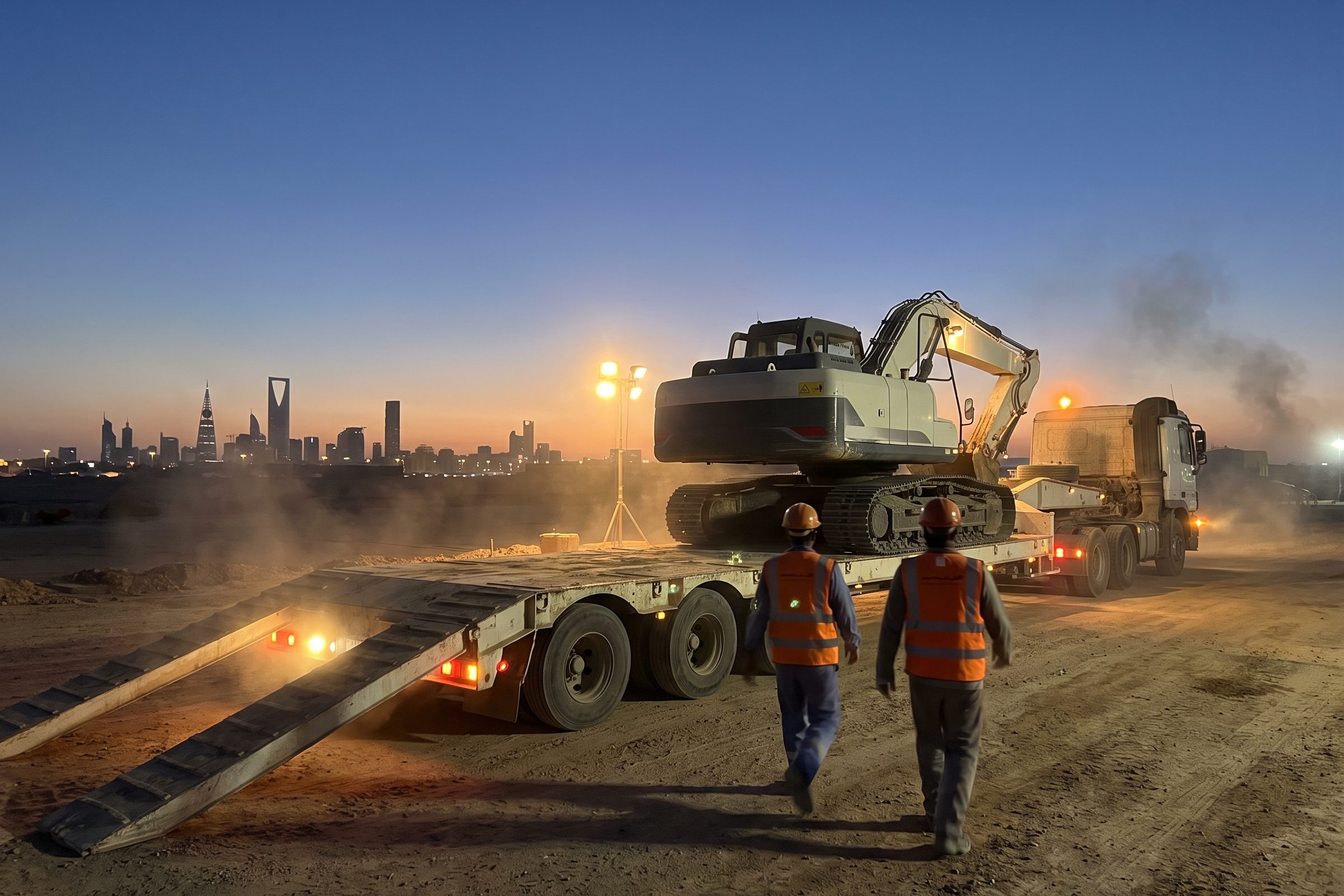
Mobilisation is quoted separately, and charged again to take the crane away:
| Crane | Mobilisation, one way (median) |
|---|---|
| All-terrain crane, 50 t | 2,000 SAR |
| All-terrain crane, 100 t | 5,000 SAR |
| All-terrain crane, 200 t | 12,000 SAR |
| All-terrain crane, 250 t | 15,500 SAR |
| Crawler crane, 400 t | 75,000 SAR |
Read the last row twice. Moving a 400-tonne crawler crane once costs more than three months of a 50-tonne all-terrain, and that machine has drawn no rental quotes at all on the platform, only mobilisation figures. For that class the transport, assembly and dismantling are the project cost.
And cranes come from further away
Two out of three of the yards that can answer for a 100-tonne crane are outside Riyadh. Asking only inside the city is asking a third of the market, and the ones outside will price the journey into the offer.
What actually moves a crane price
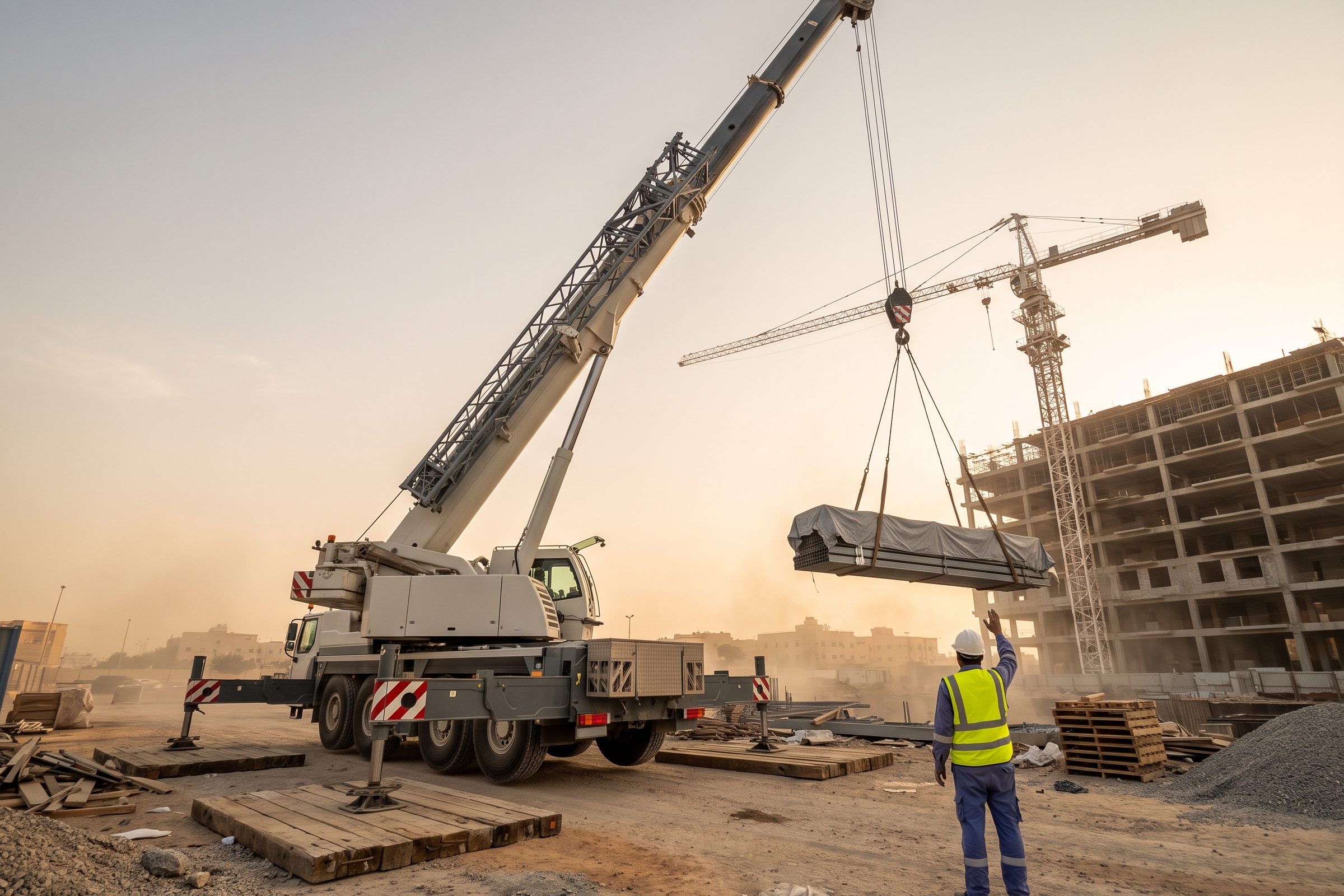
- Capacity, then radius. A crane's safe working load falls as the boom reaches out. A 50-tonne crane is not a 50-tonne crane at 20 metres. Give the supplier the weight and the radius, or you will be quoted the wrong machine.
- Duration and standby. Lifting days and waiting days are priced differently; agree which is which before the crane arrives.
- Wet or dry hire. Operator, rigger and banksman are a crew, not a detail.
- Site and access. Ground bearing, outrigger spread, overhead lines: all of it changes the machine, and therefore the price.
How to ask for a crane so the offers compare
- State the lift, not the crane. Heaviest load including rigging, the radius at which it must be placed, and the height.
- Give the dates and the standby pattern: how many lifting days inside how many calendar days.
- Ask for mobilisation and demobilisation as numbers, both ways, and for assembly time on anything above 100 tonnes.
- Say who provides the crew (operator, rigger, banksman) and who holds the lift plan.
- Ask the same question of several yards at once, including outside your city for the larger classes.
Then compare on one basis. A crane offer that omits radius and mobilisation is not cheaper than one that includes them. It is just less finished.
Current figures by machine are on the rental rates page, the heavy classes are listed under heavy equipment, and how a request works covers the rest.
Source: Moedatech platform data. The published ranges rest on 13,820+ supplier quotes given on the platform between April and August 2026. Figures on this page are Riyadh unless stated, in Saudi riyals, excluding VAT. A quote count in a table is the number of offers received for that one machine size in that period; it is not a measure of how many suppliers or machines are on the platform, which the company publishes separately. Operator share and mobilisation are medians across the quotes for that size, and a price range is the middle half of them, so a quarter of offers sit below it and a quarter above.