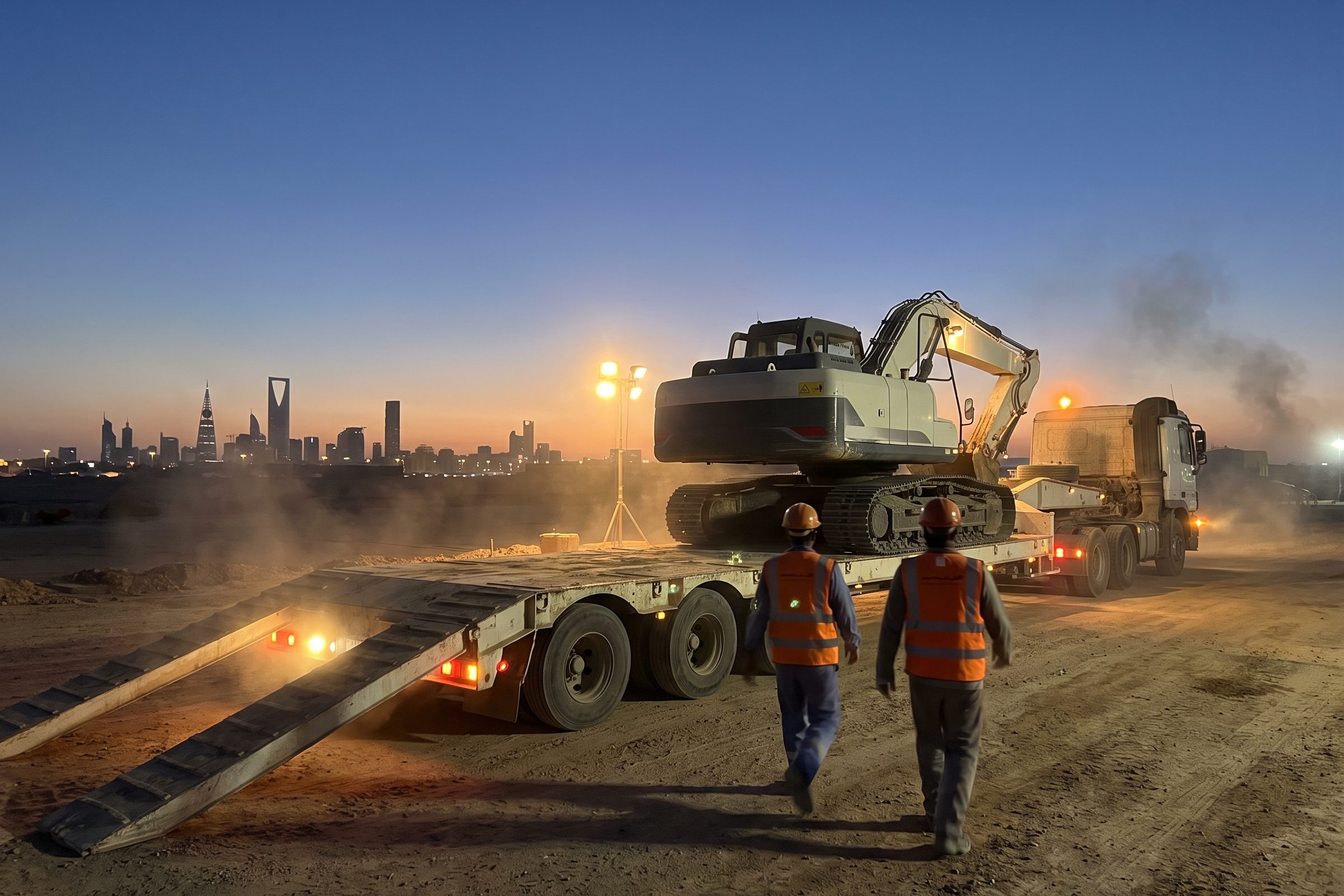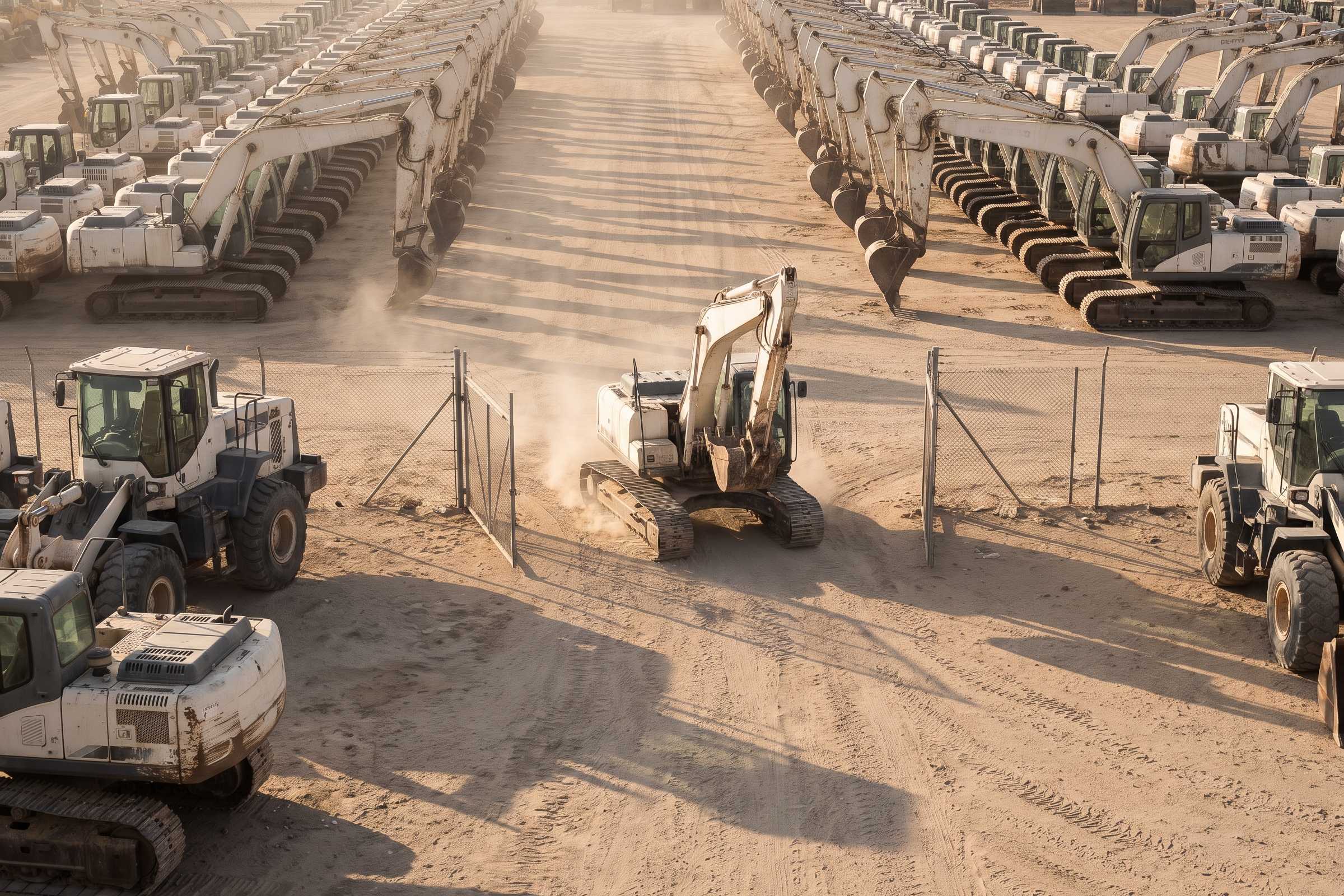


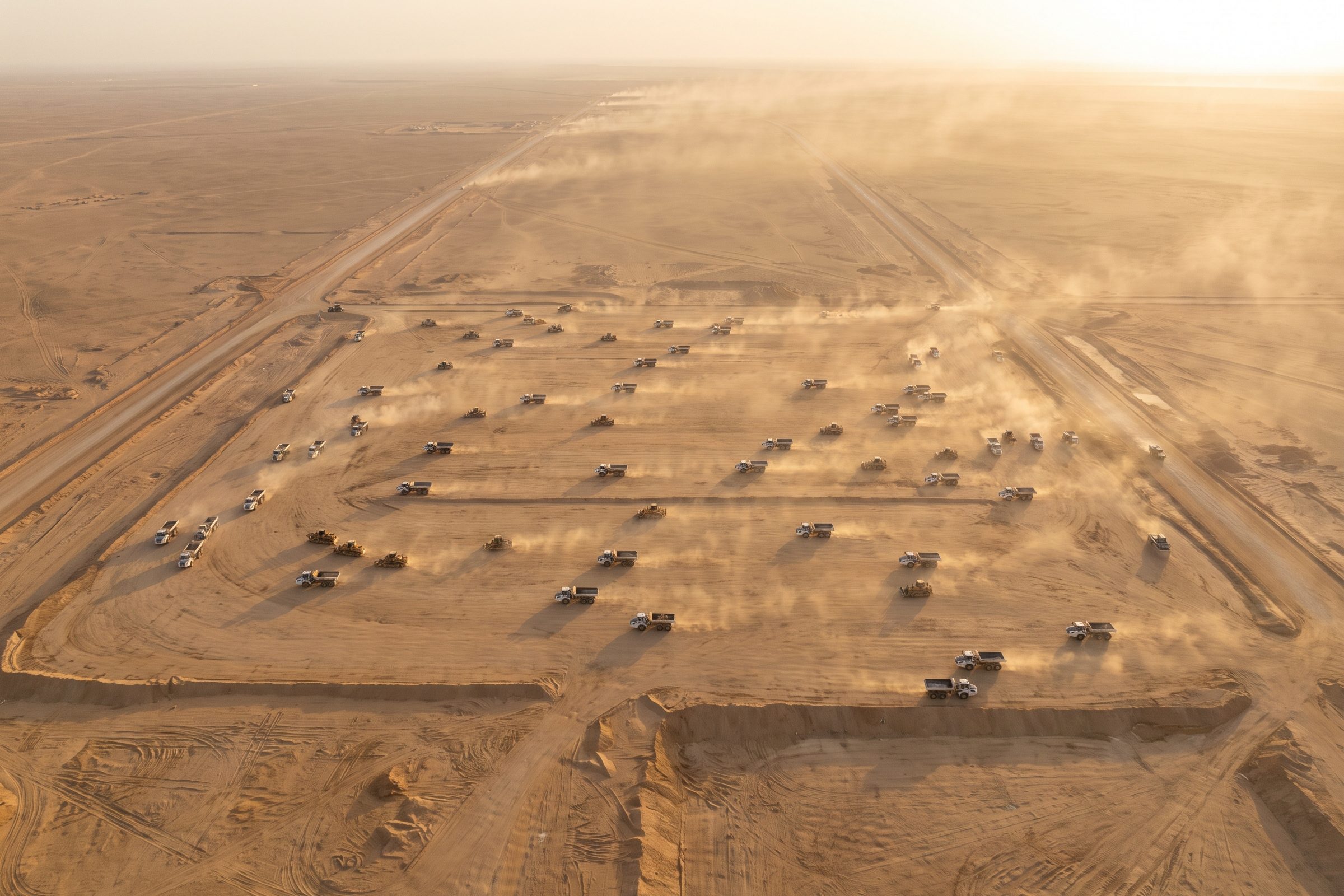
The giga-projects are real and the demand is real. Almost every number attached to them in equipment articles is not.
NEOM, the Red Sea project, Diriyah, Qiddiya and King Salman Park are announced, funded and building. What we will not do is tell you how many cranes they have "absorbed" or what the market is worth. We have not measured that, and nor has anybody quoting it at you. What we have measured is who answers a request, for which machine, and where from.
In short
- Plan around supply depth, not headlines. The useful question is how many yards can quote your machine class.
- Some classes are national markets. A 100-tonne crane draws three times as many quotes Kingdom-wide as in Riyadh.
- Others are local. A 10-tonne forklift is quoted almost entirely in one city.
- When demand concentrates, transport is the cost that moves, and it is charged both ways.

The number that actually helps you plan
Not market size: supply depth. For each machine class, how many quotes came from Riyadh, and how many from the Kingdom as a whole:
| Machine and size | Where the answers come from |
|---|---|
| Crawler excavator, 20 t | About a third from outside Riyadh |
| Backhoe loader, 74-109 hp | About half from outside Riyadh |
| All-terrain crane, 50 t | Nearly half from outside Riyadh |
| Forklift, 10 t | Almost all from Riyadh itself |
| Wheel loader, 3 m³ | More than half from outside Riyadh |
| All-terrain crane, 100 t | Two in three from outside Riyadh |
| Dozer, D9 (50 t) | All from Riyadh itself |
How to read it
Where the Kingdom column is much larger, the machine has a national market: a 100-tonne crane is answered three times more often from outside Riyadh than inside it, and a 3 m³ wheel loader more than twice. Where the two columns are close (the 10-tonne forklift, the D9 dozer) what you can find locally is very nearly all there is.
That distinction is what a tight market does to you in practice. When a region's demand spikes, the classes with a national market can still be sourced, at the cost of transport. The classes without one cannot.
What tight demand actually changes
Transport, first
Mobilisation is quoted separately and charged in both directions: a median of about 1,000 SAR for a 20-tonne excavator, 5,500 for a D8 dozer, 12,000 for a 200-tonne crane. A machine that has to travel to a remote project site carries that cost twice, and it is the line that moves most when local supply is exhausted.
Then notice, not price
In a tight market the scarce thing is lead time, not riyals. The contractor who writes a complete request three weeks out is competing with far fewer people than the one who calls around on the Sunday.
And the scope questions get sharper
When yards are busy they quote what suits them. That is when an offer quietly excludes the operator, or prices a month as four weeks. Across our quotes the operator is included in 85% of 20-tonne excavator offers but only 36% at 30 tonnes: assume nothing.
Planning equipment around a long build-out
- Check the depth of your class before you commit dates. A machine with a national market can be found late; a local-only class cannot.
- Put transport in the budget twice, and treat distance as part of the price rather than a surcharge.
- Ask earlier and wider: a supplier can answer a shared request without an account, which widens the pool beyond registered yards.
- Own what you always need, hire what you sometimes need. On a multi-year programme the calculation changes machine by machine.
Current ranges and quote counts by machine are on the rental rates page; how a request works covers the asking.
Source: Moedatech platform data. The published ranges rest on 13,820+ supplier quotes given on the platform between April and August 2026. Figures on this page are Riyadh unless stated, in Saudi riyals, excluding VAT. A quote count in a table is the number of offers received for that one machine size in that period; it is not a measure of how many suppliers or machines are on the platform, which the company publishes separately. Operator share and mobilisation are medians across the quotes for that size, and a price range is the middle half of them, so a quarter of offers sit below it and a quarter above.