Contractors choose an excavator by tonnes. Suppliers price it by what it is, where it has to work, and how many of them exist to ask.
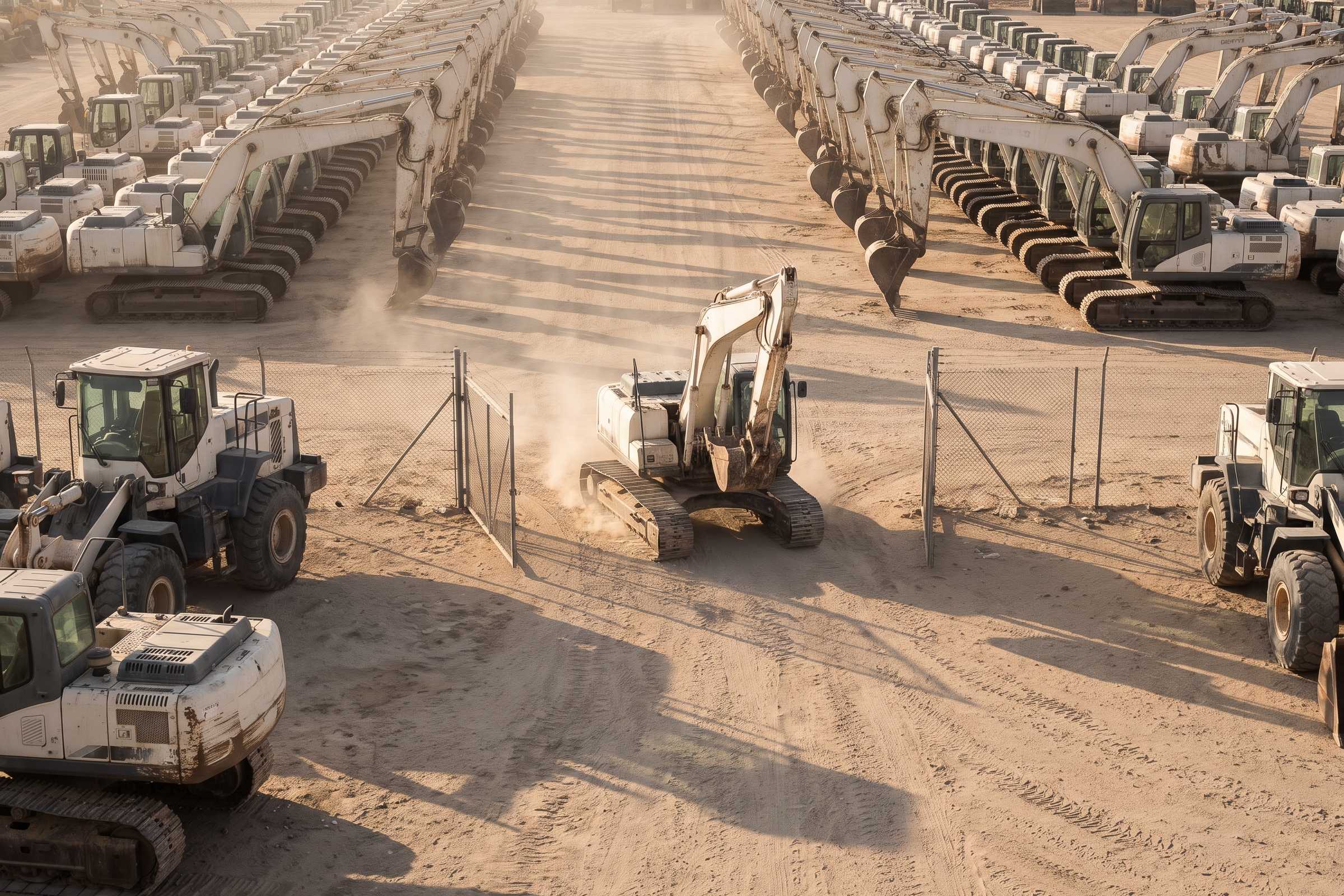
The 20-tonne crawler is the default for good reason: it is the most quoted machine on the platform by a distance. But a default is not a decision, and picking the wrong type costs more than picking the wrong size.
In short
- The 20-tonne crawler is the deepest market: the most quoted machine on the platform, at 16,000-20,000 SAR a month.
- Small is not cheap. A 2-8 tonne mini quotes at 18,000-26,000 a month, above the 20-tonne, on a handful of quotes against the most quoted size we have.
- Wheeled and long reach are different products, not variants: 19,000-22,000 and 25,000-27,000 respectively.
- Who operates it changes by size: 85% of 20-tonne quotes include an operator, 36% at 30 tonnes.

What each type is actually for
Crawler excavator
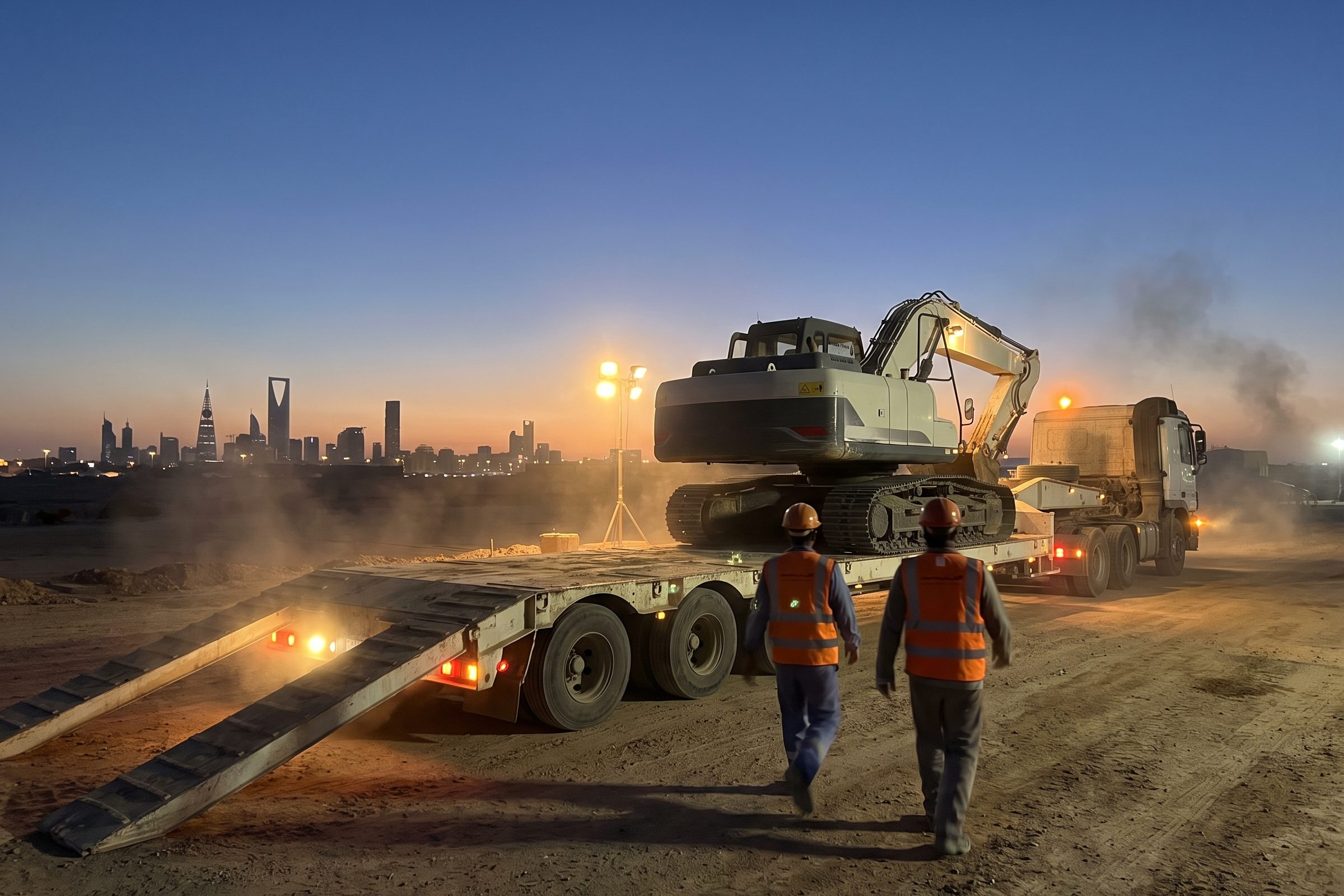
Tracks spread the weight, so it works on soft or uneven ground and holds a slope. It is slow to move between sites and needs a low-loader, which is why transport is quoted separately. This is the workhorse: bulk excavation, trenching, foundations.
Wheeled excavator
Drives itself between working points on made-up ground, which is worth a great deal on urban work, road maintenance and utilities where a machine moves several times a day. It gives up some stability and reach for that mobility.
Long reach
A longer boom and stick for canal work, slope trimming and anything you must reach across rather than stand on. It trades lifting capacity for distance: the further out it works, the less it can hold.
Mini excavator
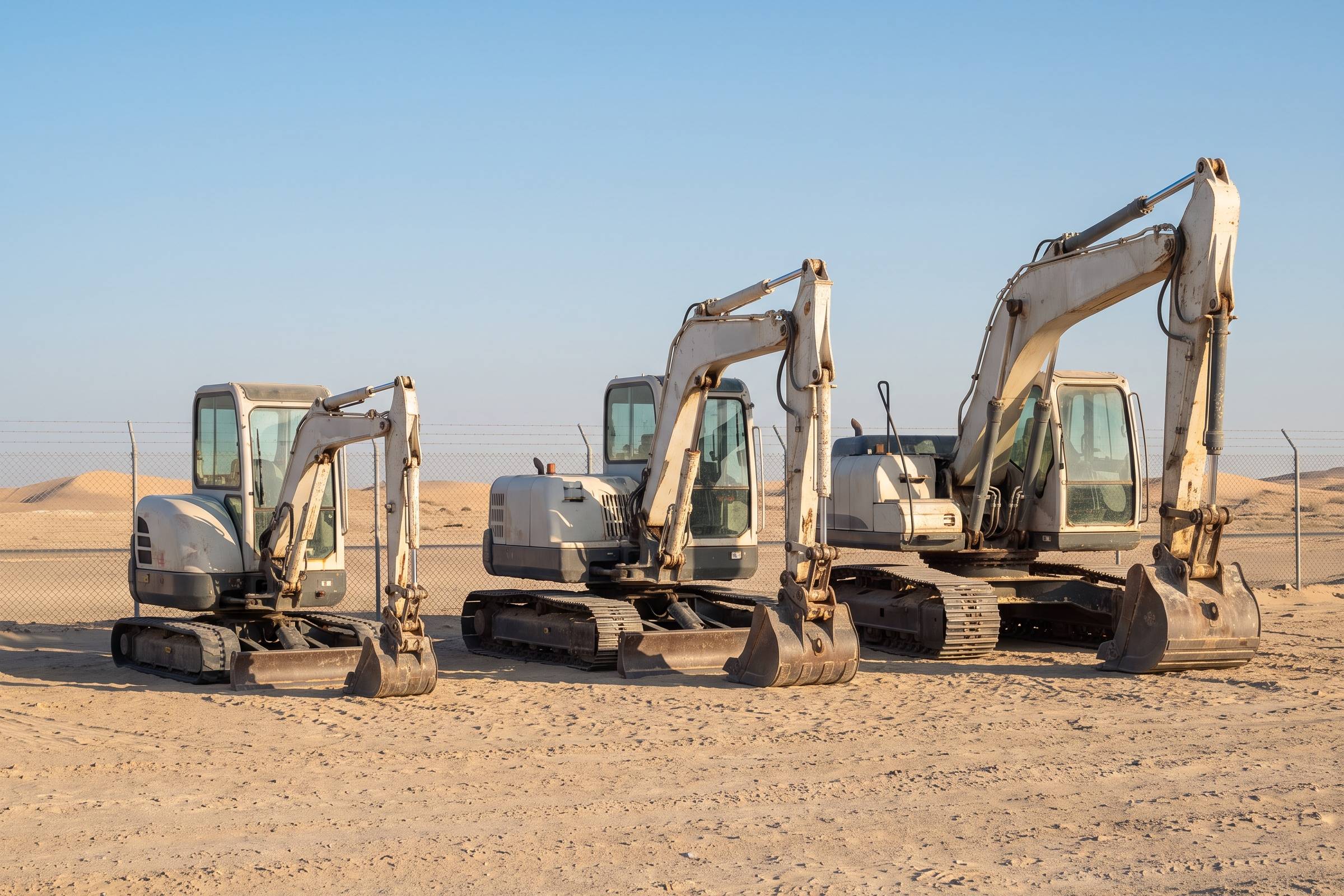
For access, not for economy: interior works, narrow lanes, gardens, jobs where a 20-tonne machine cannot physically get in. Attachment work (breakers, augers) is common, which is part of why it prices as it does.
What each type rents for
Riyadh, monthly, middle half of quotes, with the count beside it:
| Excavator | Per month, SAR | With operator | How often quoted |
|---|---|---|---|
| Crawler, 20 t | 16,000-20,000 | 85% | Most quoted |
| Crawler, 50 t | 35,000-40,000 | 71% | Often quoted |
| Long reach, 17 m | 25,000-27,000 | 92% | Some quotes |
| Wheeled, 15-25 t | 19,000-22,000 | 90% | Some quotes |
| Crawler, 30 t | 16,000-25,000 | 36% | Some quotes |
| Mini, 2-8 t | 18,000-26,000 | 75% | Few quotes |
Read the last row against the first
A mini excavator quotes above a 20-tonne crawler. That is not a misprint and it is not a market rate either. It rests on a handful of quotes, where the 20-tonne rests on more than any other size. Small machines are hired for access rather than volume, often with attachments, and far fewer yards keep them. When you are quoted for a mini, treat the number as a starting point and ask more yards than you would for a standard crawler.
And the 30-tonne row overlaps the 20-tonne one
16,000-25,000 against 16,000-20,000, on very few quotes. Class boundaries blur in practice: a "30-tonne" request covers machines and jobs that differ more from each other than from the class below. Specify the machine you need by operating weight and bucket, not by the round number.
Day rates, where they exist
A 20-tonne crawler quotes 650-800 a day and 4,000-5,250 a week against 16,000-20,000 a month: the month lands at about twenty-five days of the daily rate, and four weeks costs as much as a month.

Choosing, in the order that matters
- Access first. Gate width, headroom, turning space for a low-loader. This rules types in or out before size does.
- Ground and slope. Soft or graded ground means tracks; made-up surfaces and frequent moves favour wheels.
- Reach and depth. Measure what you must reach across, not just what you must dig.
- Then the size class, by operating weight and bucket capacity.
- Then ask (operator, fuel, transport both ways, and the duration) so the offers can be compared.
Excavator ranges by size are on the rental rates page, and the construction classes are listed under construction equipment.
Source: Moedatech platform data. The published ranges rest on 13,820+ supplier quotes given on the platform between April and August 2026. Figures on this page are Riyadh unless stated, in Saudi riyals, excluding VAT. A quote count in a table is the number of offers received for that one machine size in that period; it is not a measure of how many suppliers or machines are on the platform, which the company publishes separately. Operator share and mobilisation are medians across the quotes for that size, and a price range is the middle half of them, so a quarter of offers sit below it and a quarter above.